i Drive Fence Experts Why We Exist

We exist to stop the cycle of improper installation practices.

The i Drive Power System prioritizes strengthening the weakest link first - because no system can outperform its point of failure.

Our founder, Shawn King of Mr. Fence, set out to eliminate common fence installation issues by developing a driven steel system to reinforce posts from the ground up.

His creation, the i Drive Power System, allows contractors to drive reinforced interior beams or thicker posts deep into the ground, adding structural strength that resists leaning, settlement, or heaving. Posts are power-driven to a consistent depth, and with the i Drive method, installation is faster, heavy concrete bags are unnecessary, and dirt-removal headaches are a thing of the past.

We exist to raise the bar, protect contractors, and install fencing that stands firm long after installation day.

Mr. Fence character
Certified fence contractor installing a 3 rail black aluminum fence with the i Drive method

More Than Just a “No-Dig” Fence

The i Drive Power System is not just a product or a method - it’s a set of standards.

  • Regulated System
  • Stronger Engineering Method
  • Premium Foundation Standard
Contact Us
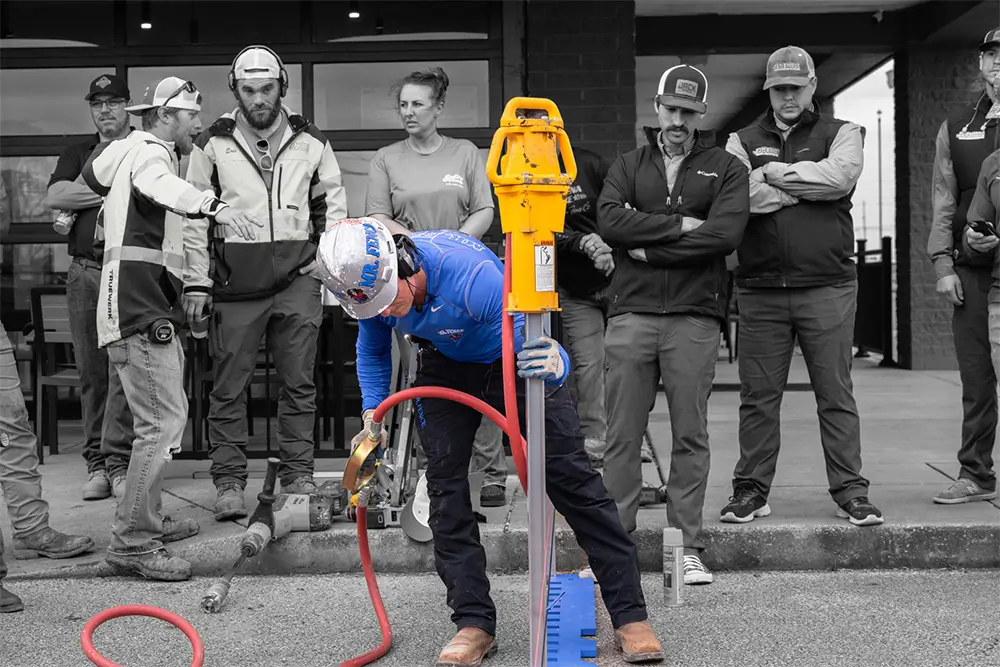
Contractors watching an i Drive Power System installation demonstration at a training event

See iDrive Power System in Action

Upcoming Contractor Training & Trade Show Appearances

SEE CALENDAR

Modern Engineering. Proven Performance.

The i Drive Power System is a professional fence installation method that uses driven steel posts and engineered reinforcement, rather than relying solely on traditional concrete footings. It is designed to strengthen the most vulnerable part of a fence, which is the post at ground level.

This system focuses on long-term structural performance, cleaner installations, and consistent quality standards that improve how fences are built from the ground up. It is not just a product, but a regulated set of standards backed by a Lifetime Foundation Guarantee.

The i Drive Power System was developed and trademarked by Shawn King, founder of Mr. Fence in Evansville, Indiana.

Shawn created the system to raise the standard of fence installation by improving structural strength and reducing unnecessary ground disruption. What began as a better way to set posts has grown into a complete installation philosophy centered on durability and performance.

Traditional fence installation involves digging holes, pouring concrete, and allowing posts to cure in place. The i Drive Power System uses steel posts that are driven deep into the ground, keeping the surrounding soil compact and stable.

This approach reduces yard disruption and eliminates exposed concrete collars that can crack over time. The result is a cleaner installation and strong support where your fence needs it most.

Most common fence types can be installed using the iDrive Power System when properly engineered. Aluminum, vinyl, chain link, and even wood fences can all benefit from driven steel reinforcement.

Each fence is evaluated based on its weight, height, and the soil conditions on your property to ensure the correct depth and support are used. Additionally, to meet iDrive standards, every gate is built with the Insta-Gate Kit to eliminate sagging and ensure long-term performance that matches the fence's strength.

Fence posts are typically the first part of a fence to fail, especially at ground level, where moisture and movement occur. The i Drive Power System reinforces that critical area with driven steel support.

For wood fences, reducing direct soil contact can help limit rot at the base. For vinyl and metal fences, internal steel reinforcement helps resist bending and shifting. Over time, that means fewer structural repairs and more dependable performance.

The Weakest Link Doctrine is the principle behind the i Drive Power System that states a fence can never outperform its weakest component. Instead of overbuilding visible parts like rails, panels, or gates to create the illusion of strength, this approach identifies the true point of vulnerability, often the foundation, and strengthens it first. Each installation follows a disciplined process: locate the weakest link, reinforce it without exception, verify real performance in the field, and then move to the next point of stress. The result is systemic strength built on physics and verification, not guesswork or cosmetic overengineering.